
By Yiwen Zhu
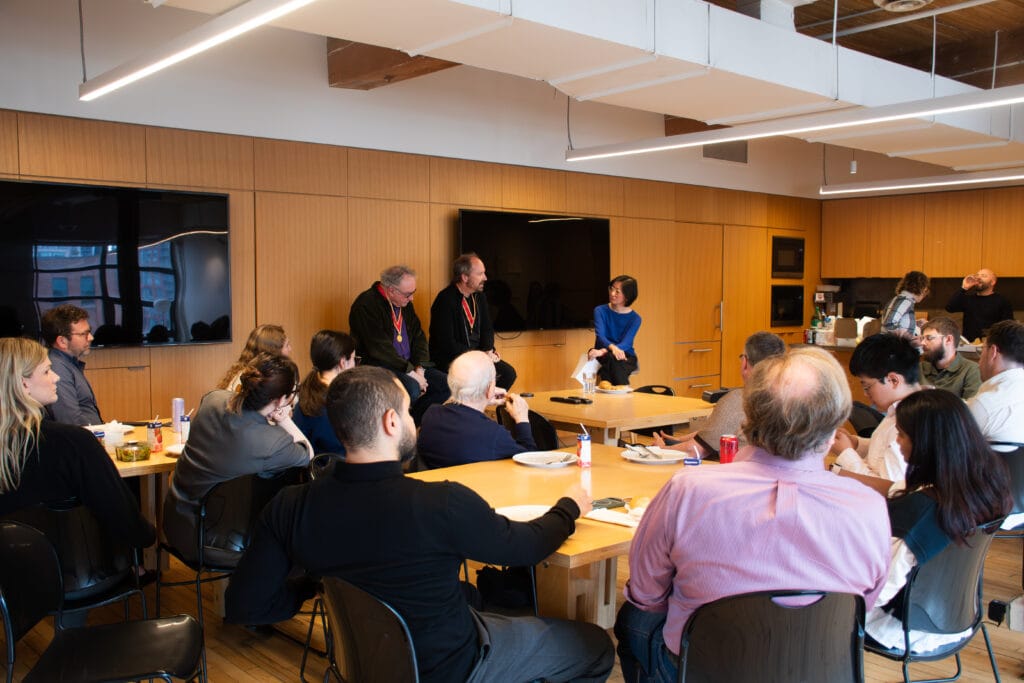
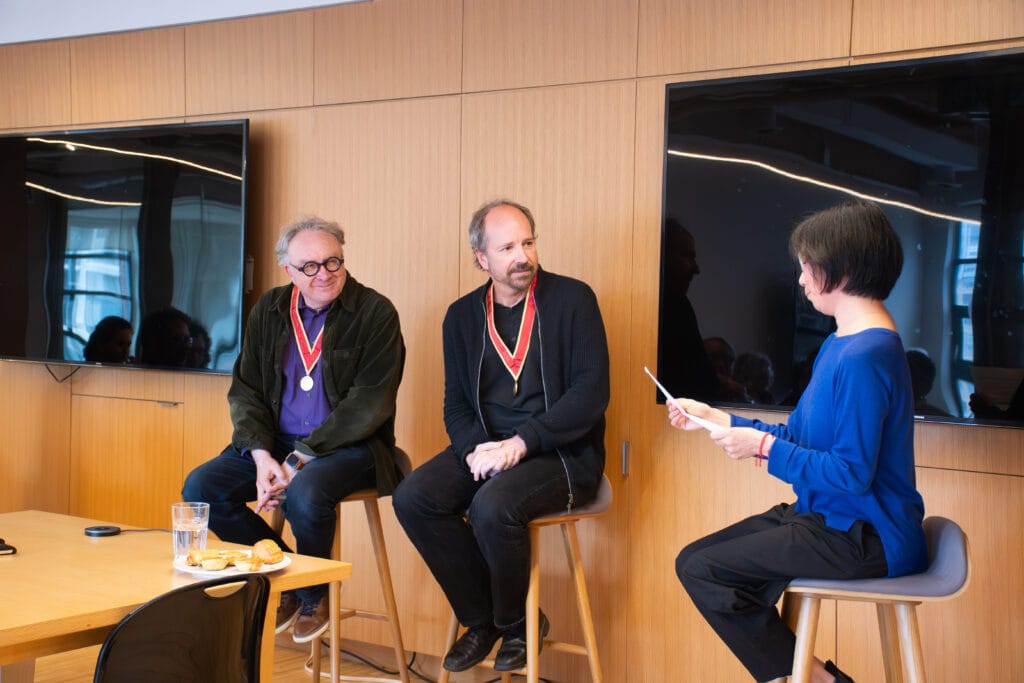
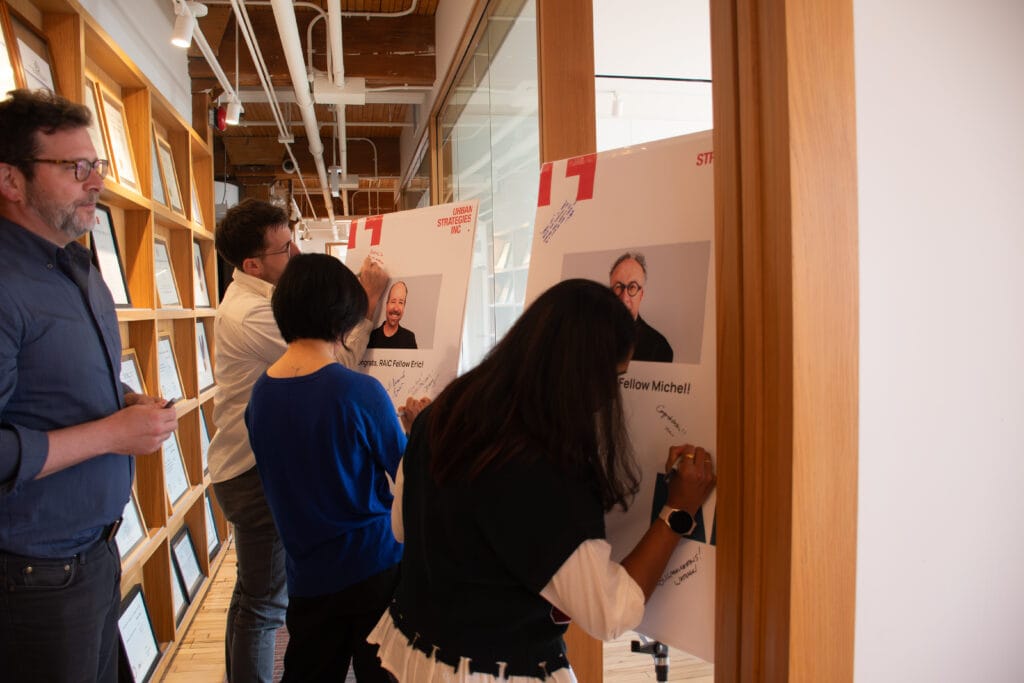
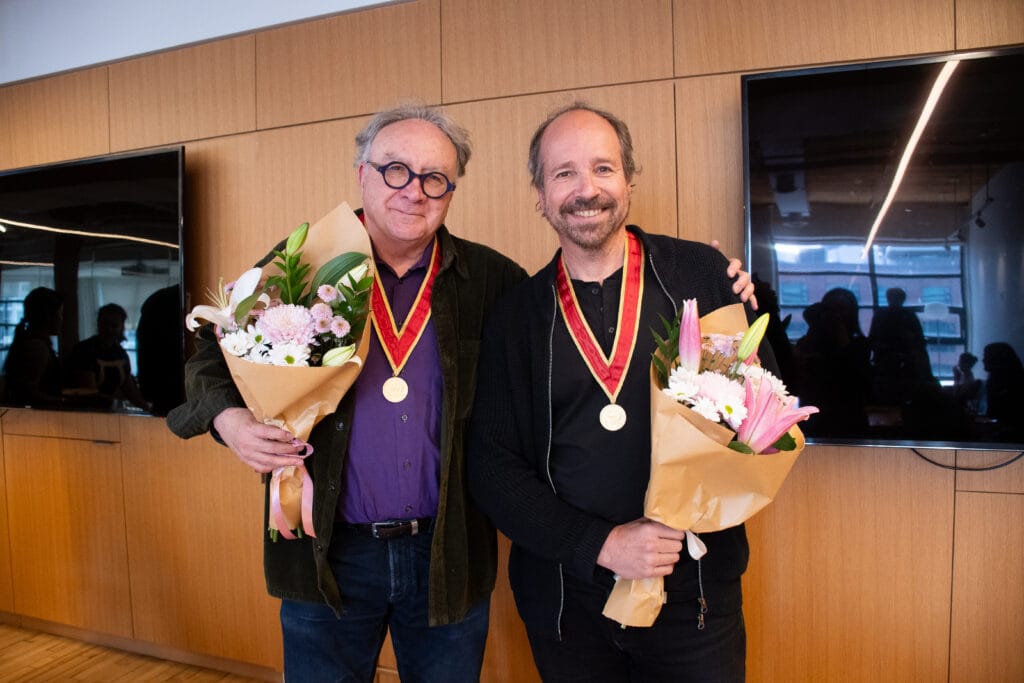
At a recent Live Lunch, I had the privilege of sitting down with Michel Trocmé and Eric Turcotte to celebrate their induction into the Royal Architectural Institute of Canada (RAIC) College of Fellows, one of the highest honours in the profession. The RAIC Fellowship recognizes individuals who have achieved professional eminence or rendered distinguished service to the profession, the community, or the advancement of architecture in Canada and abroad.
Founded in 1907, the RAIC serves as the national voice for architecture and the built environment in Canada. Fellowship within the RAIC College is a distinction traditionally associated with architects whose contributions have significantly shaped the profession through practice, research, public service, or design excellence.
What makes this year’s recognition particularly meaningful for Urban Strategies is that Michel and Eric are being recognized not primarily for individual buildings, but for their broader contributions to urbanism, city-building, and public life. As Frank Lewinberg noted during the discussion, it is rare for urbanists to receive this distinction, particularly within a profession historically centered around architecture and building design. Their induction reflects an important acknowledgment that shaping cities, public spaces, and communities is equally central to the future of the profession.
What followed was not simply a retrospective on distinguished careers, but a candid conversation about curiosity, leadership, collaboration, and the evolving responsibilities of designers in shaping cities and communities.
Architecture and Urbanism
Both Michel and Eric began their careers in architecture before eventually gravitating toward urbanism and city-building at a larger scale. Although their professional paths evolved, each spoke about how architectural training fundamentally shaped the way they think and work today.
Eric reflected on his longstanding fascination with cities and urban life, explaining that architecture gave him “the best overall education” because it combined art, systems thinking, and human behaviour. “I always liked the bigger picture,” he shared. “I liked to understand why people live [the way they do], how they interact with one another.”
Michel described how his early experiences working alongside landscape architects and architects helped expand his understanding of how people experience space. He recalled learning the importance of water, ecology, and land stewardship early in his career, lessons that would later influence projects with Indigenous communities. Another formative experience came from working in Chicago, where he absorbed the idea that “God is in the details,” gaining a deeper understanding of how buildings function technically and psychologically.
Listening to both of them speak, it became clear that architecture provided not only technical training, but also a framework for understanding cities as interconnected systems shaped by people, movement, culture, and environment.
Career and Contribution to Architecture
When asked which projects they were most proud of, neither Michel nor Eric pointed to a single defining work. Instead, they described a collection of projects that gradually shaped their philosophy and approach to practice.
Eric reflected on projects in Ireland and Ottawa that taught him how urbanism depends on collaboration and relationship-building. Describing planners and urbanists as “urban psychotherapists,” he explained that much of the work involves helping people navigate change and reconcile competing interests. “We’re like chefs,” he said. “You take ingredients and bring them together.”
He also spoke about major institutional and city-building work in Ottawa, including projects connected to transit, universities, and downtown neighbourhoods, where understanding politics and public processes became just as important as design itself.
Michel reflected on projects in Detroit that focused on revitalizing public space and reconnecting communities within the downtown core. He described the transformation of a major intersection once dominated by cars into an active civic gathering space that now hosts year-round public life. The success of projects like these, he explained, reinforced the importance of responding to the specific opportunities and needs of each place.
Throughout the conversation, both emphasized that meaningful urban work is rarely about a singular gesture or signature project. Instead, it is built incrementally through collaboration, adaptation, and long-term commitment to communities.
Vision and Future Goals
As the discussion turned toward the future of the profession, Michel reflected on how architectural discourse has changed since his years in school. He observed that conversations within architecture can sometimes become too narrow, particularly when confronting urgent global challenges such as climate change and resilience.
Eric added that architects and urbanists must continue finding ways to communicate more clearly with the public and collaborate more effectively across disciplines. Eric also spoke about the profession’s growing awareness of sustainability and the interconnected nature of cities and public spaces.
Their reflections highlighted how the role of architects and urbanists continues to expand beyond individual buildings toward broader questions of resilience, public life, and social responsibility.
Leadership and Philosophy
One of the most candid moments of the discussion came when I asked about navigating difficult collaborations. Both Michel and Eric spoke openly about the realities of interdisciplinary work and the importance of trust, patience, and communication.
Eric explained that collaboration improves when people understand you are not trying to undermine their work, but rather strengthen it. He emphasized the importance of listening carefully, stepping back when needed, and focusing on constructive solutions. “If you don’t have a solution, don’t talk about it,” he said, a comment that resonated strongly around the room.
Both also reflected on the mentors and colleagues who shaped their thinking over decades of practice. Rather than identifying a single influential figure, they described mentorship as something accumulated through observation, conversation, and collaboration over time.
The discussion revealed a shared philosophy grounded in humility and openness, an understanding that successful city-building depends on the ability to bring people together around shared goals.
Questions from the Audience
As the formal discussion opened up to the room, colleagues asked thoughtful questions that revealed even more about Michel and Eric’s perspectives on practice and cities.
When asked which city they would most like to work in, Eric responded enthusiastically: “Paris.” Michel reflected more broadly on the value of working internationally, explaining that each place presents a new experience and requires humility and engagement with local communities and collaborators.
Another audience member asked what qualities make cities successful and memorable. In response, both reflected on the importance of openness, diversity of ideas, and the ability for cities to evolve over time rather than remain fixed to a single vision. Michel noted that regulations and planning frameworks should guide cities without limiting their potential for adaptation and change.
An interesting moment in the audience discussion centered on Toronto itself and what lessons the city might offer internationally. Both Michel and Eric reflected on the unique qualities of Toronto’s urban evolution and the importance of understanding how cities grow through diversity, adaptability, and collaboration.
Michel noted that visitors from around the world are often surprised by Toronto’s openness and the way different communities, neighbourhoods, and systems coexist within the city. Eric added that one of Toronto’s strengths lies in its ability to evolve without relying on a single rigid vision. Instead, the city has grown incrementally, shaped by many voices, disciplines, and cultures over time.
The conversation suggested that Toronto’s greatest export may not be a particular design style or planning model, but rather an approach to city-building rooted in flexibility, inclusion, and collaboration. As cities around the world confront rapid growth, climate pressures, and social change, Toronto offers an example of how urban environments can remain dynamic while continuing to create space for diversity and public life.
Reflective Questions
To close the conversation, I asked what advice they would give to their younger selves. Their responses captured many of the themes that had surfaced throughout the afternoon: curiosity, courage, and lifelong learning.
Eric encouraged younger professionals to “speak up” and “take risks,” reflecting on the importance of stepping confidently into leadership roles earlier in one’s career. Michel emphasized curiosity and maintaining joy in the work itself. “Always have an open mind,” he said. “And just make sure you always have fun.”
As the conversation came to an end, what stayed with me most was the generosity and thoughtfulness with which Michel and Eric reflected on their careers. Their Fellowship recognition celebrates not only decades of professional achievement, but also an expanded understanding of what architectural leadership can look like today.
In recognizing two urbanists alongside architects, the RAIC College of Fellows is also recognizing the growing importance of city-building, collaboration, and public life in shaping the future of the profession.